Yoga is often described as a personal, inward practice—so the idea of “competition yoga” can sound surprising. Yet around the world, there are organized yoga pose challenges and asana championships where athletes are judged on how well they perform specific postures. At the same time, millions of everyday practitioners join “challenge-style” games (30-day challenges, pose-a-day trackers, social media prompts) that turn consistency and technique into a fun, motivating format.
This article breaks down what a yoga challenge competition looks like, how championships are typically run, what judges look for, and where you can explore real examples.
What is a yoga challenge competition?
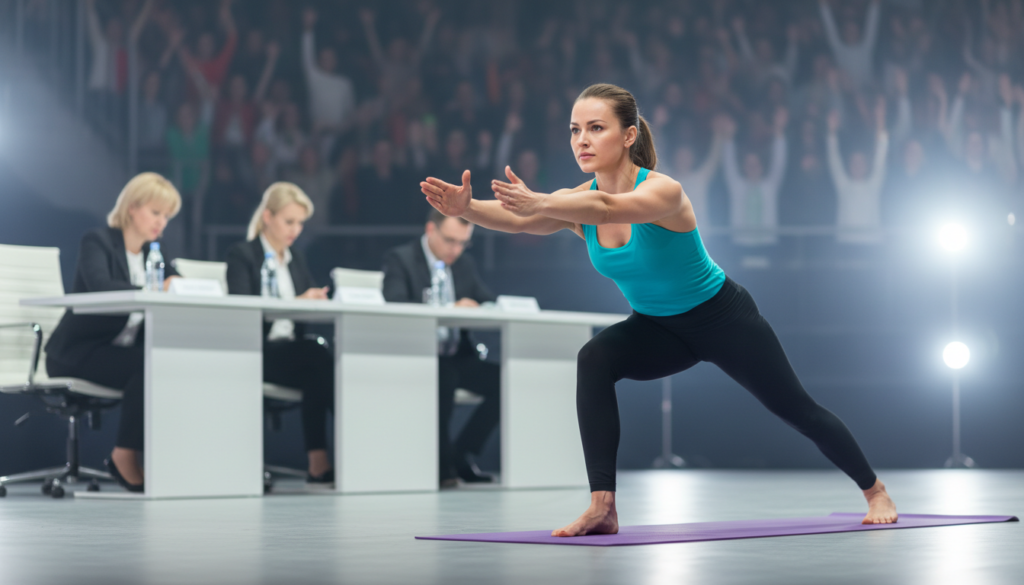
A yoga challenge competition is an event where participants perform a set of asanas (poses) under rules—often including time limits, required poses, or specific sequences. Some competitions are in-person, others are online, where athletes submit recorded performances.
Unlike a casual class, competition formats tend to emphasize:
- Precision and alignment
- Strength, balance, and control
- Hold times (e.g., 10–30 seconds per pose)
- Transitions (smoothness and stability)
- Presentation (composure, clarity, sometimes artistry)
How championships typically work (format & flow)
While formats vary by organizer, many championships follow a structure like this:
- Registration & categories
Competitions often group participants by age and sometimes by skill level. You may also see divisions (youth, adult, masters) and separate categories by gender, or open categories. - Pose list (syllabus)
The organizer publishes a syllabus—a list of compulsory poses and optional poses. A common structure is:- Perform X compulsory poses (must-do)
- Then choose Y optional poses (athlete’s choice)
- Holds might be timed (for example, 15–30 seconds per pose)
- Performance round(s)
Events can have:- A qualifier round (online or in-person)
- A final round (top athletes compete live)
- Judging & scoring
Judges usually evaluate:- Alignment and technique (joint stacking, spinal integrity, safe form)
- Stability (wobbling vs controlled stillness)
- Range of motion (without strain or unsafe compression)
- Breath and composure (steady, not frantic)
- Entry/exit control (no “falling out” of poses)
- Results & awards
Winners may receive medals, certificates, cash prizes, or qualification to other events.
What poses are commonly featured?
Competition syllabi often include a mix of:
- Standing balance (Warrior III, Standing Split)
- Backbends (Cobra variations, Wheel)
- Twists (Seated twists)
- Inversions/arm balances (Handstand, Crow—depending on division)
- Flexibility peaks (Splits, deep hip openers)
The emphasis is usually on clean execution more than extreme contortion—especially in well-run events that prioritize safety.
How to train for a yoga pose challenge (without injury)
If you want to try a challenge format, treat it like sport training:
- Pick 5–10 poses to refine, not 50 to rush through.
- Film yourself from the side/front to check alignment.
- Build support strength: glutes, core, shoulders, feet/ankles.
- Use “progressions” (e.g., blocks, wall support, straps).
- Schedule recovery days—overstretching is a common mistake.
Links: championships and challenge-style resources
Here are a few places to explore competitive formats and pose-challenge ideas:
- An example of an organized yoga championship with rules, categories, and syllabus: International Yoga Competition 2026 – Rishikesh
- Background and history of competitive yoga: Competitive yoga (Wikipedia)
- A popular “challenge” style format (video-based daily practice): 30 Day Yoga Challenge (YouTube playlist)
- Inspiration for challenge pose ideas (community-curated): Yoga Challenge Poses (Pinterest)
These links include both “championship” structures and the more casual “challenge game” style that many people enjoy.