Yoga used to mean rolling out a mat, memorizing a few sequences, and hoping you were doing it “right.” Today, yoga apps and yoga games can bring structure, feedback, and motivation into your practice—whether you want a calm 10-minute stretch before work or a playful, challenge-based session that feels more like entertainment than exercise.
Why yoga apps work (and who they’re best for)
A good yoga app acts like a personal studio in your pocket. Most offer:
- Guided classes (beginner to advanced, gentle to power)
- Programs and calendars (e.g., 7-day flexibility, 30-day consistency)
- Pose libraries (alignment tips, modifications, contraindications)
- Breathwork and meditation (often paired with sleep content)
Yoga apps are ideal if you want progressive structure—you can repeat classes, track streaks, and filter by time, goal, or intensity. They’re also helpful if you prefer quieter practice without the social pressure of a studio.
Examples to explore:
- Down Dog (highly customizable class generator): Down Dog
- Daily Yoga (large library, programs, beginner-friendly): Daily Yoga
- Glo (yoga + Pilates + meditation, strong teacher catalog): Glo
- Yoga with Adriene (Find What Feels Good) (warm, accessible approach): Find What Feels Good
- Asana Rebel (fitness-forward yoga-inspired training): Asana Rebel
What “yoga games” add that apps often don’t
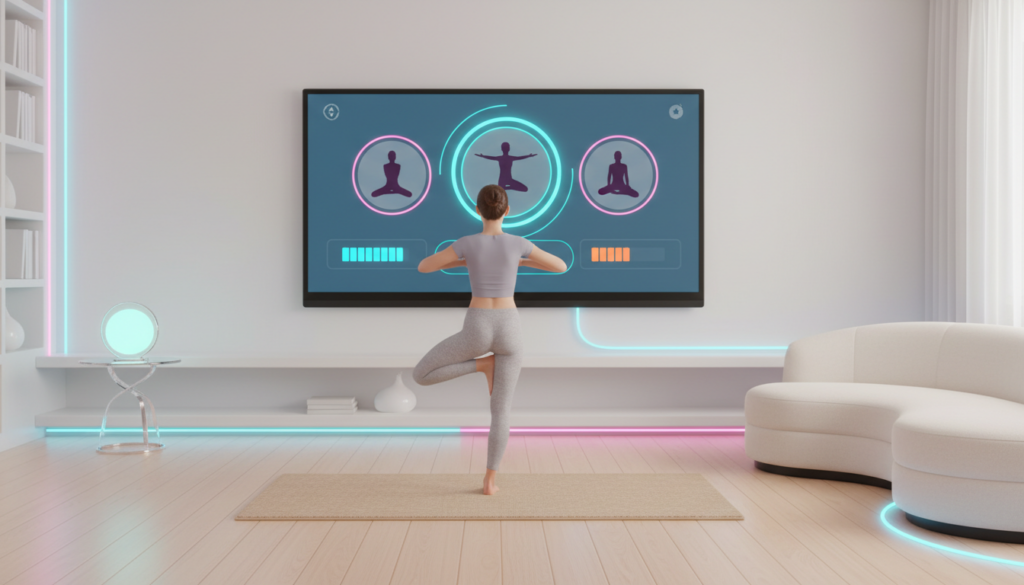
Yoga games take the same movements and wrap them in game mechanics: points, levels, streak challenges, pose-matching, timed holds, and sometimes motion tracking. They’re perfect if you:
- Struggle with consistency and need fun + frictionless motivation
- Prefer “I’m playing” over “I’m exercising”
- Like short sessions with a clear objective (beat your score, unlock a level)
Some yoga game experiences live inside broader fitness/gaming platforms—especially in VR—where movement tracking can make the practice feel interactive.
Examples to explore:
- Ring Fit Adventure (Nintendo Switch fitness adventure; not yoga-only, but includes yoga poses): Ring Fit Adventure
- FitXR (VR fitness with multiple class types; offerings change over time): FitXR
- Supernatural (VR fitness experiences; content varies by region): Supernatural
Tip: if you’re shopping for “yoga games,” search within your device ecosystem (Switch/Quest/PlayStation) because availability depends heavily on region and platform.
How to choose the right option in 2 minutes
Ask yourself these questions:
- What’s my main goal?
Flexibility & calm → yoga app. Motivation & energy → yoga game. - How much time do I really have?
Under 15 minutes → pick an app/game with short sessions and “quick start.” - Do I need alignment help?
Choose an app with strong instruction, modifications, and clear cueing. - What keeps me consistent?
If you love checklists: programs and streaks. If you love novelty: game challenges.
A simple weekly plan (apps + games together)
- Mon/Wed/Fri: 20–30 min guided class (strength, mobility, or recovery)
- Tue/Thu: 10–15 min yoga game or challenge-based flow
- Weekend: 20 min gentle session + 5 min breathwork
This mix gives you the best of both worlds: proper coaching from apps and playful momentum from games.
Safety note (especially for beginners)
Whether you use an app or a game, prioritize comfort over performance. Avoid pushing into pain, use modifications, and be cautious with wrists, knees, and lower back. “Winning” is not the goal—feeling better in your body is.
If you want, tell me your target audience (beginners vs intermediate), and I’ll tailor the article with a recommended “Top 5 features” checklist and a short comparison table.