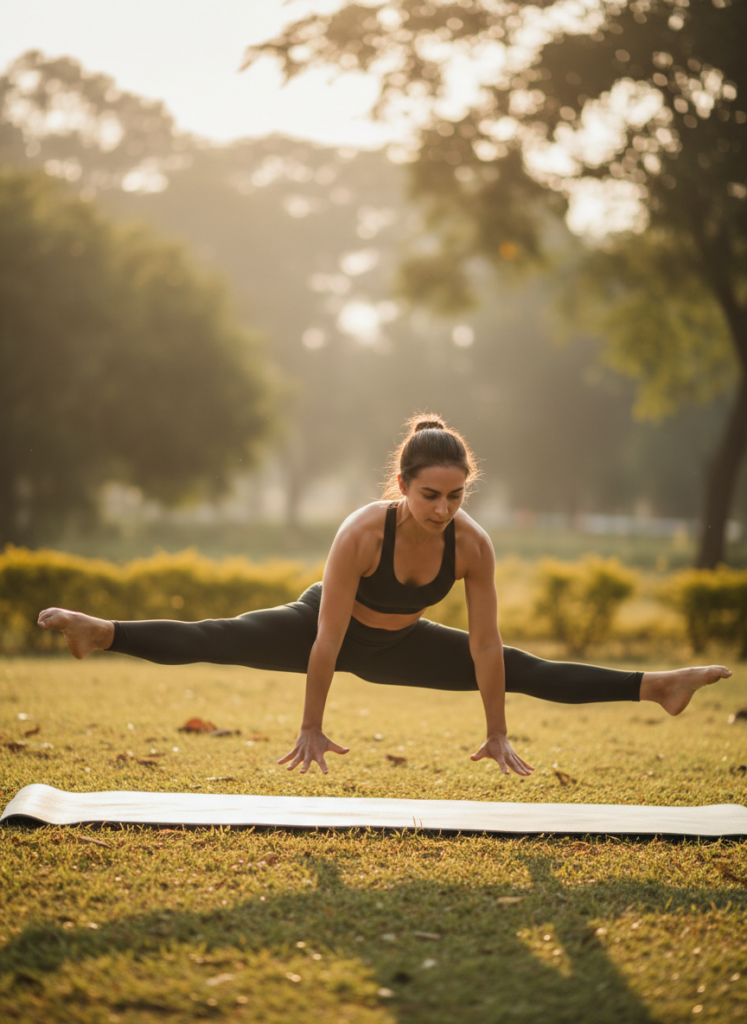
Eka Pada Koundinyasana II, often referred to as the Flying Split, is a powerful advanced arm balance that embodies the perfect marriage of strength, flexibility, and focus. This pose is not just about physical prowess; it requires a deep understanding of your body’s center of gravity and the ability to coordinate multiple muscle groups simultaneously.
The Essence of the Pose
In this pose, the body hovers parallel to the earth, supported entirely by the hands. One leg extends straight forward, resting on the back of the upper arm, while the other leg reaches powerfully toward the back of the mat. It challenges the core, opens the hamstrings and hip flexors, and builds significant upper body strength.
Step-by-Step Instructions
- The Setup: Start in a Low Lunge with your right foot forward. Place both hands on the inside of your right foot.
- The Hook: Wiggle your right shoulder as far under your right thigh as possible. Plant your palms shoulder-width apart, as if preparing for a push-up (Chaturanga).
- The Shift: Lean your weight forward into your hands. As you shift, begin to straighten your right leg over your right tricep.
- The Lift: Keep your elbows hugged in toward your ribs. As your chest moves forward, the back (left) leg will naturally become light. Engage your core and lift the back leg off the floor, extending it straight back.
- The Flight: Gaze slightly forward to maintain balance. Reach through both sets of toes, creating a straight line from the front foot to the back foot.
Key Alignment Tips
- Chaturanga Arms: Your elbows must stay at a 90-degree angle to create a stable “shelf” for your leg.
- Core Engagement: Think of pulling your belly button toward your spine to keep your hips from sagging.
- Active Legs: The pose becomes much lighter when you actively engage the muscles in your legs rather than letting them hang.
Benefits and Precautions
This pose is excellent for strengthening the wrists, arms, and shoulders while toning the abdominal organs. However, because it is an advanced movement, it is crucial to warm up your wrists and hips thoroughly. If you have existing wrist or shoulder injuries, practice with caution or under the guidance of an instructor.